
RAS Diary
Why Alkalinity Matters in a Catfish Hatchery
Jentan’s field observations on low alkalinity, pH stability and why RAS operators should treat alkalinity as part of biological-filter management rather than a secondary water reading.
By Jentan Hatchery Team · Published · Updated · 1 min read
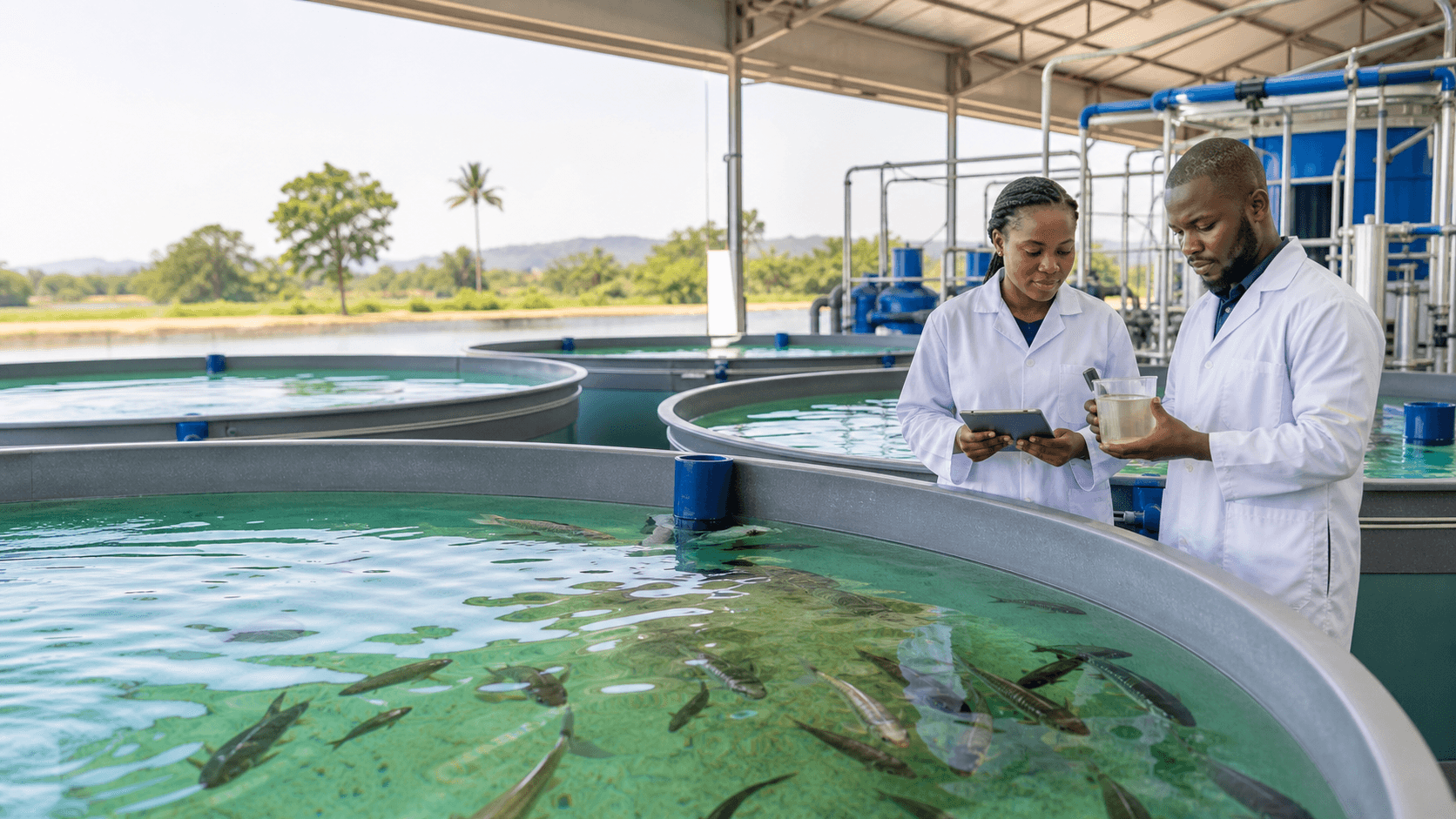
- Location
- Ozubulu, Anambra State, Nigeria
- Species
- Catfish
- Fish stage
- Hatchery / fingerling
- System
- RAS
- Problem
- Low alkalinity
- Equipment
- Water-treatment media and test kits
- Outcome
- Reinforced routine alkalinity monitoring as part of pH and biofilter management.
Recorded readings
29 August observations: overhead tank pH 6.0 / alkalinity 20 mg/L; stand-alone treatment pH 5.8 / alkalinity 10 mg/L; routed treatment pH 6.0 / alkalinity 30 mg/L.
What we measured
On 29 August, water from the overhead tank measured about pH 6.0 with alkalinity around 20 mg/L. A stand-alone treatment sample measured about pH 5.8 and alkalinity around 10 mg/L, while water routed through the treatment unit measured about pH 6.0 and alkalinity around 30 mg/L.
Why the reading matters
Alkalinity acts as a buffer against rapid pH change and is also consumed during nitrification. In a RAS, low alkalinity can therefore affect both fish stability and the bacteria responsible for converting ammonia and nitrite.
Management principle
The objective is not to add buffering material blindly. Operators should measure alkalinity, understand source-water variability and adjust gradually while continuing to monitor pH and nitrogen compounds.
Farmer checklist
- Measure alkalinity alongside pH.
- Watch for falling alkalinity as feeding and biomass increase.
- Make gradual corrections and retest.
- Confirm that treatment media are producing the expected change.
- Keep written records so trends are visible before fish show stress.
About Jentan Hatchery Team
Water Quality & RAS Operations
Field notes from the Jentan Fish Hatchery & Farms operations team in Ozubulu, Anambra State.