Water Quality
Treating Acidic Borehole Water for Catfish Production
How Jentan approached acidic source water by testing the borehole, evaluating treatment stages and focusing on pH, alkalinity and iron before the water reached the hatchery.
By Jentan Hatchery Team · Published · Updated · 1 min read
- Location
- Ozubulu, Anambra State, Nigeria
- Species
- Catfish
- Fish stage
- Source water / hatchery
- System
- Borehole treatment and RAS
- Problem
- Borehole water
- Equipment
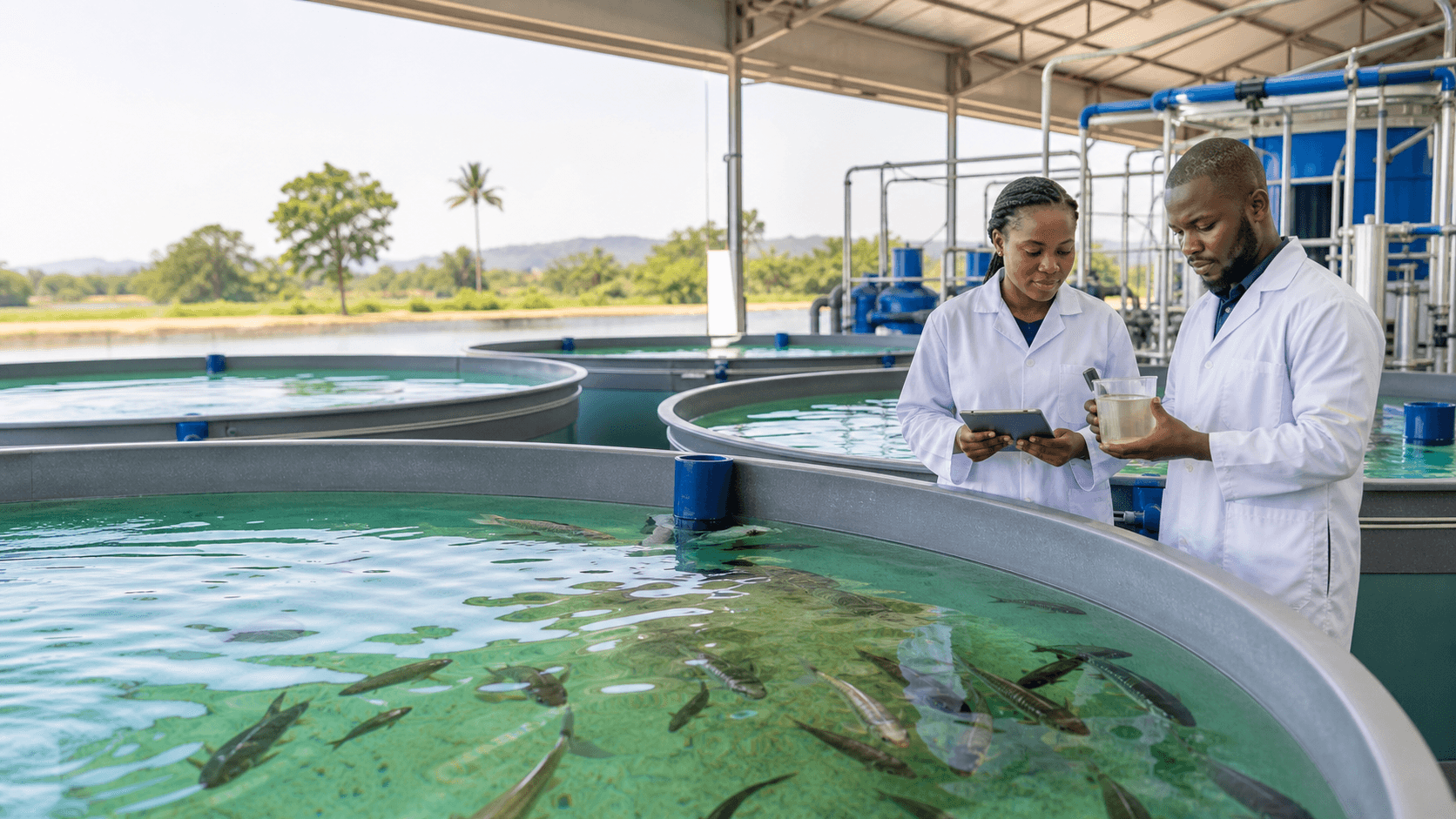
- Borehole, treatment cylinder, overhead tank and holding tanks
- Outcome
- Established a source-water treatment and verification approach before hatchery use.
Recorded readings
Untreated borehole baseline: pH 5.84; alkalinity approximately 43.2 mg/L; iron approximately 0.365 mg/L.
Starting point
Jentan’s untreated borehole water recorded a pH of about 5.84, alkalinity of about 43.2 mg/L and an iron reading of about 0.365 mg/L. Those readings made source-water conditioning an operational priority before relying on the water for sensitive hatchery stages.
Treatment approach
The treatment path was arranged so that borehole water passed through a treatment cylinder before entering the overhead storage system and subsequent holding tanks. The objective was to correct the source water before it entered the hatchery rather than repeatedly trying to correct individual production tanks.
Why stage-by-stage testing matters
A treatment system should not be judged only by what media it contains. Water should be tested before treatment, after major treatment stages and at the final point of use. This helps identify whether a media vessel is actually improving the target parameter or merely adding complexity.
Farmer checklist
- Test source-water pH and alkalinity.
- Check iron where borehole staining or laboratory results indicate a concern.
- Verify the treatment output, not just the treatment design.
- Retest after media changes or major flow adjustments.
- Keep the final hatchery water within a stable operating range rather than chasing a single perfect number.
About Jentan Hatchery Team
Water Quality & RAS Operations
Field notes from the Jentan Fish Hatchery & Farms operations team in Ozubulu, Anambra State.