Power & Energy
Powering a RAS Hatchery with Solar, Batteries and Generator Backup
A practical look at why continuous power is a biological requirement in RAS and how Jentan evaluates solar, battery storage and generator backup around real farm loads.
By Jentan Hatchery Team · Published · Updated · 1 min read
- Location
- Ozubulu, Anambra State, Nigeria
- Species
- Catfish / Tilapia
- Fish stage
- Hatchery and grow-out
- System
- RAS and grow-out
- Problem
- Power outages
- Equipment
- Solar PV, lithium battery storage, inverter system and generator backup
- Outcome
- Power resilience treated as part of fish-health and continuity planning, not only electricity-cost management.
Recorded readings
Planning baseline: 60 kWh batteries; 40 × 650 W solar panels (about 26 kWp); hatchery load about 1.935 kW; grow-out load about 5.595 kW.
Why power is a fish-health issue
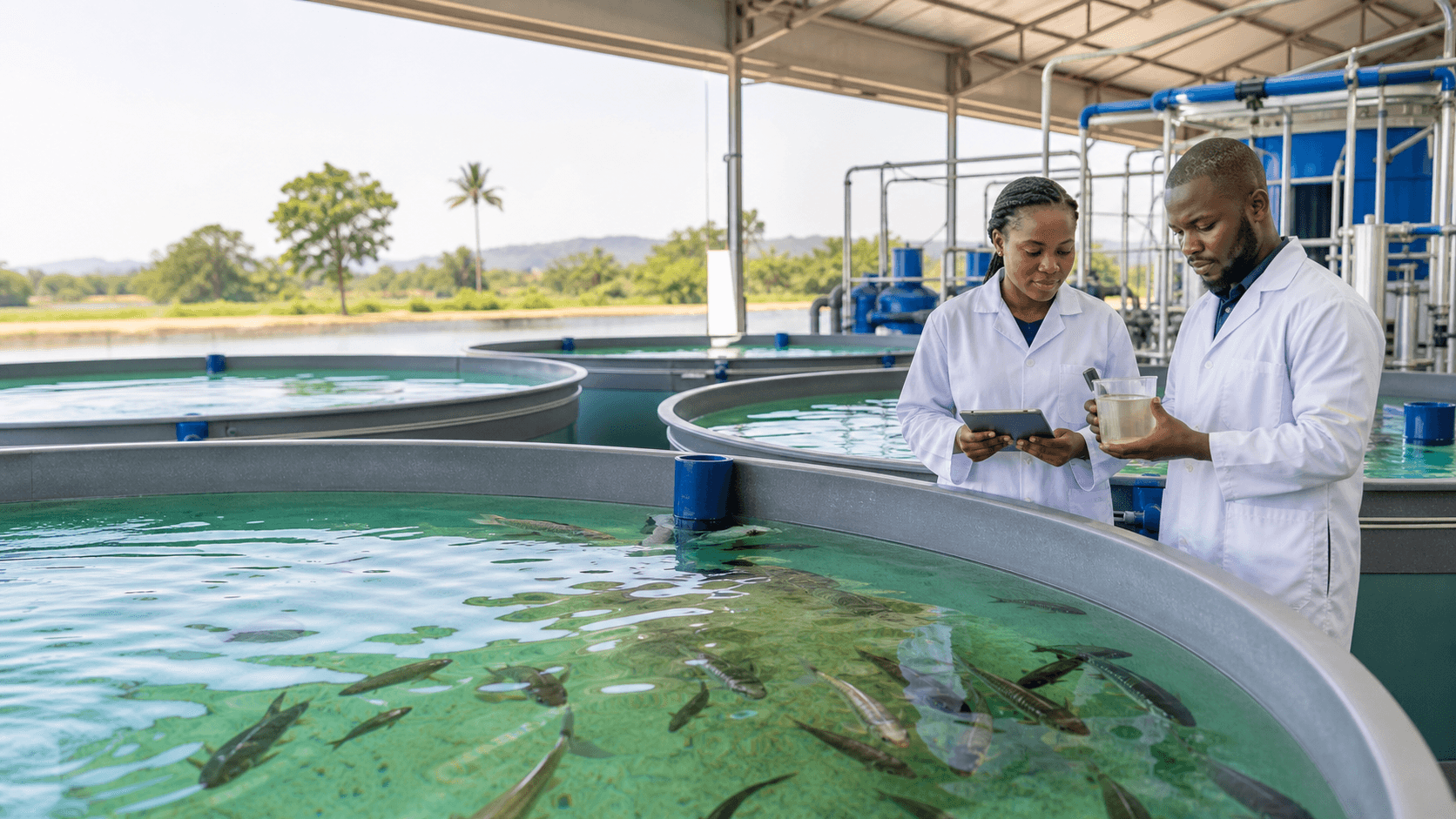
In a recirculating aquaculture system, electrical reliability is not merely an operating-cost question. Pumps, aeration, oxygen support and treatment processes are part of the life-support system. A prolonged outage can quickly become a water-quality and fish-survival incident.
Jentan’s planning baseline
Jentan’s power planning has used a 60 kWh battery bank with approximately 26 kWp of installed solar capacity from forty 650 W panels. Measured/planned operating loads have included roughly 1.9 kW for the hatchery and about 5.6 kW for grow-out systems, with generator backup available.
The design lesson
Battery capacity should not be selected only by multiplying the nameplate kWh by the load. Operators also need to account for usable depth of discharge, inverter losses, battery reserve, night-time duration, solar recharge conditions, starting loads and the minimum life-support equipment that must remain online during an emergency.
Farmer checklist
- Separate critical life-support loads from non-critical loads.
- Calculate realistic overnight autonomy.
- Keep reserve battery capacity for poor-weather periods.
- Test generator auto/manual backup procedures.
- Maintain fuel, transfer switches and alarms.
- Record outages and use them to improve contingency planning.
About Jentan Hatchery Team
Farm Operations
Field notes from the Jentan Fish Hatchery & Farms operations team in Ozubulu, Anambra State.